
Zumba Classes in Noida: Is Zumba good for losing weight?
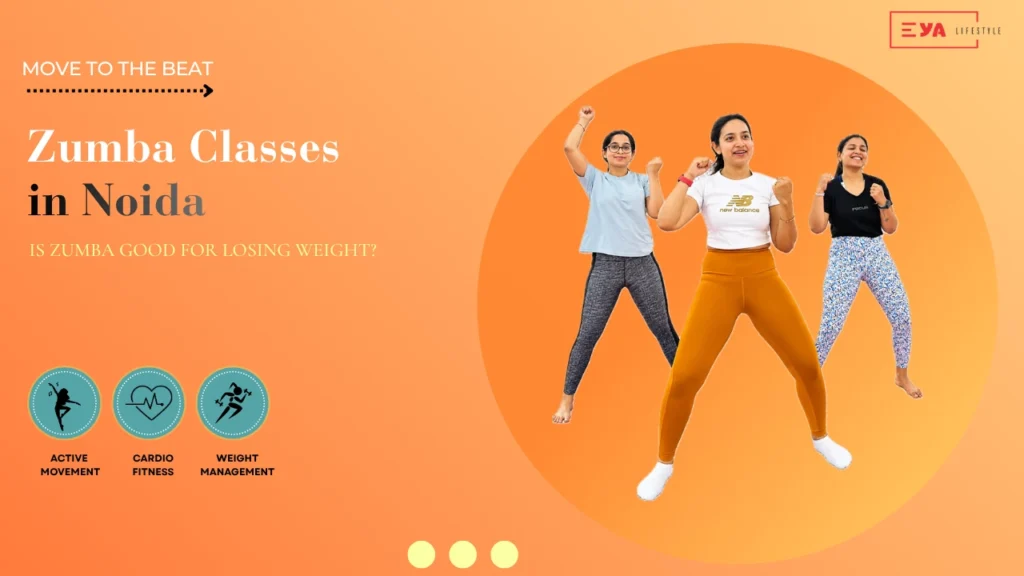
“I should exercise” turning into “okay, this is actually fun” is basically what Zumba Training in Noida is for. No watching the clock tick through every minute of a workout here. Continuous full-body movement meets changing rhythms, and the result is an energetic session that hits stamina, coordination, and cardiovascular fitness all at once. It’s a dance-fitness format, but becoming a dancer isn’t the goal, and neither is nailing every movement perfectly. Guided Zumba classes in Noida focus on something simpler: keeping the body moving, picking up patterns gradually, and building the confidence to follow along at whatever pace fits. Better fitness, more stamina, healthier weight management, whatever the goal, Zumba slots in as one part of a balanced, sustainable routine, not the whole plan by itself. What Is Zumba Training? Rhythm-based movement meets aerobic exercise, keeping different parts of the body active throughout the session. Direction, speed, and intensity all shift, so the upper and lower body have to coordinate while the movement never really stops. In a Movement & Wellness Centre in Noida, Zumba usually fits within something bigger rather than standing alone for the entire workout. Cardio, mobility, strength, and recovery each play a role depending on what you’re working toward. A typical Zumba session may work on: What Are the Major Zumba Workout Benefits? Working up a sweat is just the surface of what Zumba Training in Noida actually does. Because the body keeps moving through varied patterns, several aspects of fitness get challenged at once, not one at a time in sequence. Supports Cardiovascular Fitness Continuous movement raises your activity level and genuinely tests cardiovascular endurance. As consistency builds week over week, sustaining activity for longer stretches starts feeling less like a grind and more like second nature. Pairing Zumba with strength training in Noida rounds things out for anyone chasing a more complete routine, with cardiovascular work on one side and progressive resistance training on the other. Builds Coordination Changing direction while syncing different parts of the body together, that’s exactly what makes Zumba useful for building coordination and body awareness. Perfect rhythm from class one isn’t expected in Zumba, so you can focus on coordination. Repetition builds familiarity, and movements tend to get easier to follow as the body starts recognising the patterns on its own. Develops Stamina Repeated movement with barely any downtime, a full session looks like that, which is exactly why Zumba for Stamina appeals to people who want high-energy training over something slower. Functional training in Noida fits well alongside this for anyone wanting to sharpen everyday movement patterns too, building strength, stability, and control to complement the cardio side. Keeps Full-Body Movement Engaging Legs alone don’t carry a Zumba session. Arms, trunk, and lower body stay engaged as the patterns shift throughout the workout. That variety is part of why some people find a rhythm-based workout easier to return to than a repetitive cardio routine that eventually feels like a chore. How Can Zumba Support Overall Health? Regular physical activity supports overall health, and Zumba training in Noida offers an engaging way to add more movement to your week. Treating Zumba as a cure for specific medical conditions misses the point. Its real value lies in helping people build a more active lifestyle, one they’ll actually keep up with. Encourages Regular Physical Activity Consistency is the hard part of fitness, no way around that. An enjoyable workout tends to stick much better than one that feels like a daily battle to force through. Personal training in Noida is worth exploring for anyone who wants more individual guidance while building a routine, especially when fitness level, movement limits, or specific goals call for more customised progression. Supports Mobility Through Varied Movement Zumba asks the body to move in different directions, not one repetitive pattern. Depending on the session, hips, shoulders, and trunk can all move more dynamically than usual. Yoga classes in Noida pair well here for anyone needing more controlled mobility work, where flexibility, balance, and mindful movement develop at a slower, different pace. Adds a Social Element to Fitness Exercise feels a lot less isolating in a group. Sharing a session with others builds routine, accountability, and energy that keeps people showing up week after week. Pilates classes in Noida offer a slower, more controlled option on other days, supporting core control, stability, and body awareness alongside a higher-energy Zumba routine. Can Zumba Help With Weight Management? Treat Zumba for weight management as part of a bigger lifestyle, not a shortcut to dropping weight fast, and it works best that way. Physical activity goes up during a Zumba session, energy expenditure along with it, sure, but sustainable weight management still comes down to eating habits, daily activity, strength, recovery, and consistency, none of which one workout format can cover alone. A structured weight management program in Noida pulls these pieces together instead of expecting a single workout to do everything. For healthier long-term progress, focus on: What the scale shows is secondary. The real aim is a routine that keeps going long after that number changes. Is Zumba Suitable for Beginners? Yes. Your fitness level shapes how Zumba training in Noida is modified, and you don’t need to know every movement beforehand to walk into that first class. Follow the main movement pattern to start, take smaller steps when needed, and skip comparing yourself to someone who’s clearly been doing this for years. Calisthenics classes in Noida become worth exploring gradually for anyone interested in building additional bodyweight strength down the line, another form of guided movement to layer in later. What If You Have Pain or a Previous Injury? Pushing through an unresolved injury was never what Zumba is meant for. Significant pain, recurring symptoms, and clear limitations during movement, any of these call for proper assessment before anything else happens. A Rehabilitation Centre in Noida helps figure out exactly what mobility, stability, or strength needs rebuilding before returning to something this energetic makes sense.
Pilates Training in Noida: How They Support Mobility, Posture, and Strength
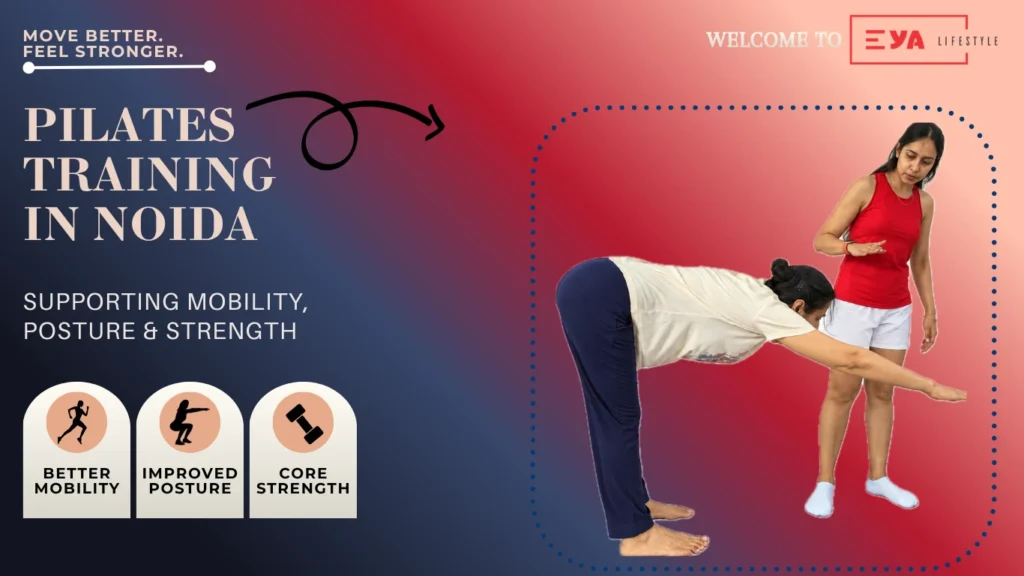
Pilates might look easy when you watch someone else do it. Then you try a few exercises yourself and quickly realise your core has been doing much more work than you expected. No need to rush from one repetition to the next. Most of your attention stays on your breathing, posture, and movement. That is what makes Pilates training in Noida a focused approach to building strength, flexibility, balance, and better body control. Pilates combines core work, breathing, alignment, and controlled exercises into a workout. This can help build mobility, posture, stability, and strength in everyday activities over time. If you prefer to focus on how you do an exercise rather than the number of reps, guided Pilates classes in Noida offer an alternative approach to fitness. What Is Pilates Training? Pilates is a movement training that emphasises control and body awareness rather than the movement itself. Some movements don’t seem difficult, but finding the right position while moving another part of your body can be surprisingly challenging. At EYA Lifestyle, Pilates is part of a wider movement-focused approach. As a Movement & Wellness Centre in Noida, we improve movement step by step. We don’t treat mobility, posture, and strength as completely separate parts of fitness. Instead, our Pilates training in Noida focuses on how these elements work together to help you move with greater control and confidence. How Does Pilates Support Mobility, Posture, and Strength? One useful part of Pilates is that a single exercise can work multiple physical qualities. You may move through a certain range while also staying stable and keeping your muscles engaged. That combination matters because flexibility is key, but so is movement control. Pilates for Mobility Pilates for mobility isn’t about pushing yourself to the limit. Rather, the exercises will require you to move the joints through a reasonable range while keeping the muscles engaged. Pilates usually addresses the hips, shoulders, and spine well. However, if you’re injured or in pain or have had significant limitations in your range of motion, it might not be a good idea to jump into a regular workout regimen. In such cases, an evaluation or advice from a Rehabilitation Centre in Noida may be suitable. Pilates for Posture and Body Awareness Posture isn’t just about sitting up straight or pulling your shoulders back. Your trunk, shoulders, and spine also move when you walk, bend, reach, and exercise. With Pilates for posture, you’ll get more practice in noticing these postures as you move. This can help anyone who sits for most of the day or tends to stiffen after long periods at a desk. Yoga classes in Noida can also work well alongside Pilates if flexibility, balance, and mindful movement are part of your goals. Pilates for Functional Strength Don’t let the slower pace fool you. Pilates can build strength without turning every session into a heavy-lifting workout. Bodyweight resistance, slow repetitions, and holding certain positions can challenge the core, glutes, hips, shoulders, and smaller muscles that help keep you stable. If you also want to increase resistance and overall strength, you can add strength training in Noida to your routine. Pilates can then focus more on control and movement while strength sessions provide a way to gradually increase the load. Pilates for Core Stability Your core isn’t just your abdominal muscles. Your trunk has to stay steady while your arms and legs move, and Pilates spends a lot of time strengthening that connection. That is why many Pilates core exercises have one part of your body stay stable while the other moves. With practice, you can improve coordination and control. You may notice the benefit in everyday movements as well as during other workouts. What Can You Expect During Pilates Training? A Pilates session is not meant to feel like a race. You may spend more time on a movement than you would in a fast-paced workout because the point is to notice your position and stay in control. Depending on your fitness level and goals, Pilates training in Noida may include: If you are starting after a long break or feel that you need more one-to-one guidance, personal training in Noida may also be worth considering. Individual attention can make it easier to learn new movement patterns and understand how an exercise should feel. Who Can Benefit From Pilates? One nice thing about Pilates is that the same basic movement can usually be made easier or harder depending on the person doing it. You don’t have to be very flexible or already fit to start. The idea is to build control first and make things more challenging as you improve. Pilates may suit: If you want to explore bodyweight strength later, calisthenics classes in Noida are another option. If you want something more energetic during the week, Zumba classes in Noida can add a cardio-focused workout to your routine. Why Pilates Works Well With Other Forms of Exercise No rule says Pilates has to be your only workout. In fact, its focus on stability, mobility, and control fits naturally with other exercises. For example, Pilates can support: This is where training at a movement studio in Noida can help someone who doesn’t want to do the same workout every day. Different forms of exercise have different strengths. One may focus on mobility, another on strength, and another on cardio. Together, they can give you a more varied routine. The EYA Way: Control Before Complexity At EYA Lifestyle, Pilates training in Noida starts with learning how to perform a movement before making it harder. Movement specialists work with you on positioning, technique, and progression. Your job is to perform the movement, pay attention to your body, and build better control over time. This approach is also connected to EYA’s Active Movement Therapy philosophy. An exercise isn’t useful just because it looks difficult. The focus is on learning the movement properly and moving forward when your body is ready for the next level. Conclusion Pilates is about much
Active Lifestyle for Kids: How Parents Can Encourage Healthy Habits From a Young Age
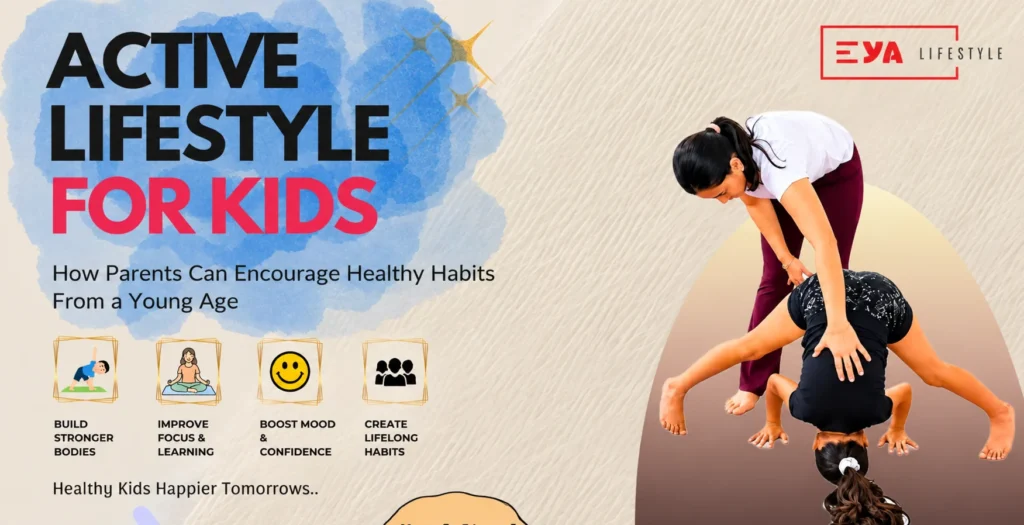
The concept of maintaining an active lifestyle for kids doesn’t typically begin with a discussion of exercise. It usually starts much earlier, with what kids see their parents doing every day. Kids notice when parents take the stairs, move around, join in something active, or make fitness a part of the day. They might not listen to everything you say, but they copy habits without even realising it. That’s why parents need to build healthy habits in their kids. You don’t want to make a six-year-old obsessed with a workout. You’re just helping movement feel normal, fun, and something worth making time for. At EYA Lifestyle, Kids Training in Noida works the same way. Kids get introduced to guided movement early so fitness grows with them instead of becoming something they only discover later as adults. Role of Parents in Helping Kids Stay Active and Healthy Kids feel movement long before they understand words like “fitness,” “stamina,” or “wellness.” They pick up on whether activity gets celebrated, avoided, enjoyed, or treated like a chore. Parents don’t have to be athletes to support an active lifestyle for kids. Walking together, joining family activities, supporting outdoor play, or taking care of their own health can create a home where movement fits naturally. The type of home kids have can really shape their receptiveness to physical activity, sports, and organised fitness later in childhood. How Parents Can Encourage Healthy Movement Habits The best way to build healthy habits in children is to let them see you do it every day, rather than giving lots of reminders. Some consistent changes and movement are easier to accept and enjoy. 1. Let Them See You Move Kids get the value of activity better when they see adults doing it too. A walk, a yoga session or a regular workout shows fitness isn’t just for children. This is where mother-child fitness can really work: movement becomes shared time instead of another instruction. 2. Make Movement Part of the Routine Workout time doesn’t always have to be a dedicated hour. Walking, cycling, outdoor play, stretching, or structured kids’ fitness can all fit into an active routine. When movement becomes regular during the week, it feels like a normal part of life instead of something special. 3. Choose Activities They Actually Enjoy Not all children enjoy the same type of physical activity. Some go for fast movement, others prefer balance, skills, or bodyweight challenges. At EYA Lifestyle, Movement and Wellness Centre in Noida, kids can try different movement formats instead of getting pushed into one activity just because adults think it’s good exercise. 4. Focus on Skills, Not Appearance Kids shouldn’t learn that fitness is mostly about body weight or looks. Point them toward what their bodies can learn: This builds a healthier relationship with exercise for children and keeps the focus on what they can do. 5. Move Together Sometimes A child doesn’t always need another instruction, sometimes they just need company. Walk together, join movement challenges, or take part in Family Wellness Workshops in Noida, where fitness becomes shared family time. Kids often join in more freely when the adults around them are involved too. 6. Create Balance Around Screens Screens are part of modern childhood, so the goal doesn’t have to be zero screens. Just make sure sitting doesn’t take over every chance to move. Outdoor play, scheduled movement breaks, active weekends, and movement breaks during longer periods of sitting are good ways to balance screen time with movement. 7. Celebrate Consistency Over Performance Some children may learn a movement immediately, others may take a couple of sessions. That’s normal. Give encouragement for effort, participation, and progress, not just for the fastest and best. An active lifestyle for kids is more sustainable when it’s not always a competition. Which Fitness Activities Can Help Kids Stay Active? Variety helps children choose activities that feel most meaningful to them. Different activities also build different physical abilities. Kids Fitness Training Structured kids training in Noida combines coordination, balance, mobility, bodyweight strength, stamina, and playful movement challenges. It gives children structured physical activity rather than adult-style exercise. Zumba Fitness Zumba classes in Noida can build coordination, stamina, and full-body activity while keeping sessions fun and energetic for children who enjoy rhythmic movement. Yoga for Kids Mobility, flexibility, balance, and body awareness can be introduced in guided yoga classes in Noida. It can also teach children that being active doesn’t have to be fast-paced. Calisthenics Age-appropriate callisthenics classes in Noida can help kids feel strength through their own bodyweight. Crawling patterns, balance work, and controlled movements can gradually build stability and confidence in movement. Functional Movement As kids get comfortable with basic patterns, suitable functional training in Noida can develop movements like squatting, reaching, changing direction, and controlled bodyweight activity that connect with everyday life and sport. What Does an Active Lifestyle Give Growing Kids? An active lifestyle for kids isn’t about filling every free hour with organised fitness. It’s about creating enough chances for kids to use, understand, and develop their bodies. Regular movement activities for kids can support: Most importantly, healthy habits developed early can help children feel comfortable with movement rather than having to push their way into a sedentary lifestyle later in life. When Should Parents Consider Guided Kids Fitness? Some children are active on their own throughout the day, others require a little more organisation or encouragement. Guided fitness may be worth looking into when: For kids who benefit from greater individual attention, age-appropriate Personal Training in Noida can also offer a more personalised progression based on current ability and movement confidence. Building Healthy Families at EYA Lifestyle At EYA Lifestyle, we believe movement habits can start early and grow with the family. We created a Wellness Studio in Noida that combines children’s fitness, yoga, Zumba, callisthenics, personalised movement, and family fitness, allowing children to explore movement beyond the traditional definition of exercise. Parents don’t have to insist on fitness; they can start
Benefits of Kids Fitness Training Sessions From Age 6: Building Strong Movement Habits
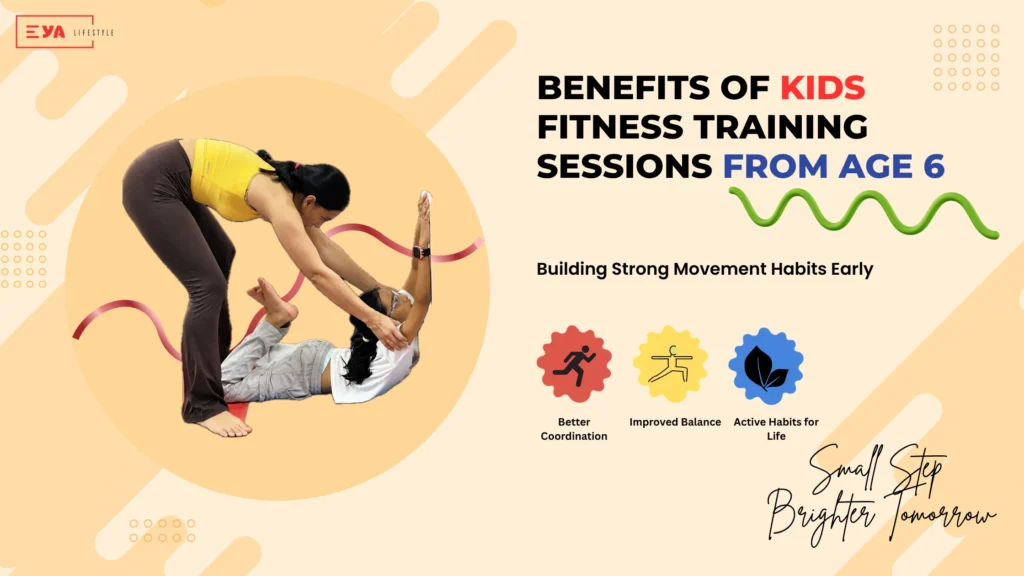
Kids fitness training sessions help 6-year-olds move, play, and build healthy habits. At this age, physical activity should feel fun, playful, and enjoyable, creating positive associations with movement that encourage kids to stay active as they grow. Many children spend long periods sitting at school, at home, and while doing their homework. Starting structured kids’ fitness activities at age 6 gives them time to learn to run, balance, coordinate, stretch, and strengthen in age-appropriate ways. At EYA Lifestyle, Kids Training in Noida helps children build strong movement habits early without adult-style workout pressure. About Kids Fitness Training Sessions Kids Fitness Training Sessions match a child’s age, current skill level, and developmental stage. They skip heavy weights and performance numbers. Instead, they focus on coordination, mobility, balance, bodyweight strength, stamina, and varied movement patterns. Children participate in a range of activities at a Movement and Wellness Centre in Noida and are guided to understand how their bodies work. The primary goal is to make physical activity normal, fun, and something children can keep as they grow older. Types of Kids Fitness Training Sessions Not every child enjoys movement the same way. Some prefer high-energy play while others connect better with balance, body control, or strength challenges. A solid kids exercise program therefore mixes different movement types instead of repeating one fixed routine. Functional Movement Training Functional movement is how children move in daily life, such as squatting, crawling, reaching, running, hopping, and changing direction. Age-appropriate functional training in Noida builds better coordination and body control. It also gives children a practical base for daily activity and recreational sports. Yoga and Mobility Training Not all sessions need to be fast. With guided yoga classes in Noida, children practice flexibility, balance, mobility, and body awareness. Slow, controlled moves help them learn to slow down, sense where they are in space, and move more fluently across a wider range. Zumba and Rhythm-Based Fitness For those kids who enjoy active movement, Zumba classes in Noida can transform exercise into a fun activity. When music is matched with other rhythms, it stimulates stamina, coordination, and movement of the whole body without making fitness sound like the same old drill. Calisthenics and Bodyweight Training Children can begin building strength using their own body weight instead of external loads. Crawling, supported holds, balance tasks, and controlled bodyweight movements may be incorporated in age-appropriate calisthenics classes in Noida. These gradually build strength, stability, and confidence in movement. Benefits of Enrolling in Kids Fitness Training Sessions From Age 6 Early movement isn’t about producing athletes at age six. It is about handing children physical skills they can keep using as they grow. Kids Fitness Training Sessions support everyday confidence, school activities, and participation in sports. 1. Builds Coordination Early Children keep learning how different body parts work together. Running, hopping, changing direction, and moving arms and legs at the same time develop kids’ strength and coordination. This makes harder skills easier to pick up later. 2. Develops Balance and Body Awareness Balance lets children manage their bodies during play, sport, and daily life. Moves that change position, height, and direction improve kids mobility and balance. They also help children know where their body sits in space. 3. Introduces Strength Naturally Strength doesn’t have to start with dumbbells. Crawling, climbing, controlled squats, holds and other bodyweight moves challenge muscles in a natural way. Good movement training for children puts control and technique first before any extra resistance. 4. Supports an Active Lifestyle Structured movement becomes a regular part of a child’s life, making it more normal to remain active rather than forced. Kids fitness training sessions foster an active lifestyle for children, extending to play outdoors, recreational activities, and their daily movement. 5. Builds Stamina Children need stamina for more than sport. School games, playground time, walking, running and climbing all call for endurance. Regular fitness activities help children stay active longer without turning every session into an all-out effort. 6. Improves Movement Confidence Not every child feels at ease with physical activity right away. Guided challenges let them learn at their own speed and notice small gains. When more one-to-one attention helps, personal training in Noida can shape movement progress to match a child’s ability. 7. Makes Fitness Enjoyable Children stick with activity more readily when movement stays engaging. Games, challenges, partner work, and mixed sessions keep kids’ fitness training sessions interesting while still building real skills such as balance, coordination, and strength. 8. Builds Healthy Family Habits Kids tend to adopt at-home behaviors that seem normal to them. Families that make movement and active time normal can help children see wellness as a way of life. Family wellness workshops in Noida give families a chance to exercise together, not separately. Can Kids Fitness Training Sessions Help in Sports Injury Rehabilitation for Kids? Kids Fitness Training Sessions are sometimes part of the return-to-activity pathway after a sports injury, but only after the child gets medical clearance and is ready for structured movement. Sports injuries may temporarily reduce mobility, strength, balance, confidence, or coordination. Delaying until the pain eases and then returning to full sport can place the child in demands that are beyond his/her capacity. A structured Rehabilitation Centre in Noida or a qualified healthcare professional first checks the injury. As recovery moves forward, sports injury rehabilitation in Noida can gradually restore the physical abilities needed for activity. Depending on the injury and professional advice, this may cover: Conclusion Starting kids’ fitness training sessions from age six gives children more than just an activity slot. It brings balance, mobility, strength, stamina, coordination, and confidence to their life before it is fully developed, before they are connected with movement. EYA Lifestyle is the best movement and wellness centre in Noida that integrates the concept of kids fitness, yoga, Zumba, calisthenics, rehabilitation, and family wellness. Children can try movement in different ways as they grow. Explore Kids Training in Noida at EYA Lifestyle and help your child build healthy movement habits
Zumba for Beginners: How to Keep Up Without Feeling Lost
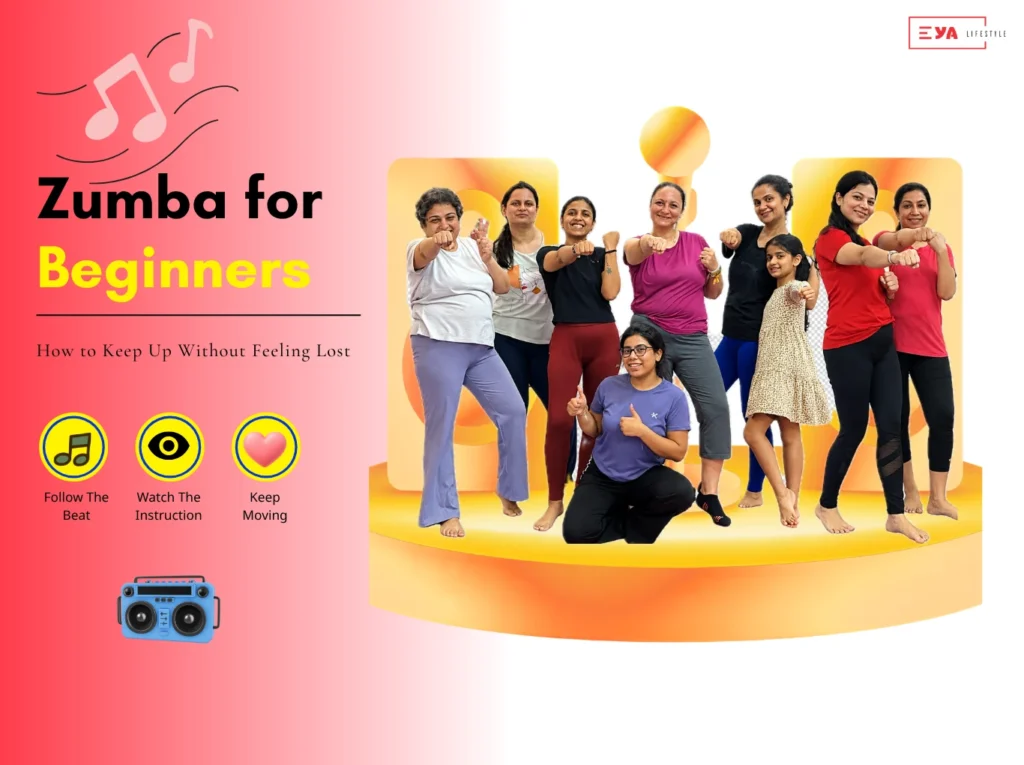
The first time you step into a Zumba class, the pace can feel quick because your body is learning how to move with changing rhythms and movement patterns. Zumba is a fitness dance workout where the goal is not to perform every step perfectly but to keep moving with how your body responds. That is why Zumba for Beginners focuses on staying active, following the flow, recognising repeated movements, and gradually improving coordination and stamina. Different music-based rhythms guide your movements, but the focus remains on fitness, full-body movement, and consistency. When exploring Zumba classes in Noida, choose beginner-friendly sessions where you can start at your own pace without worrying about matching experienced participants. Keep moving, follow the instructor, and let each session make the movements feel more natural and easier to follow. Why Does Zumba Feel Fast at First? Zumba mixes music, cardio moves, coordination, and shifting patterns. Beginners end up handling several things at once. You may be trying to: That is why Zumba for Beginners can feel more like a brain workout at the start. With regular Zumba sessions in Noida, the moves and the switches start to feel known. Instead of thinking through every step, your body begins to recognise the patterns. How to Keep Up in Your First Zumba Class You don’t need a dance background to begin. What helps more is knowing what to focus on. Follow the Feet First If the instructor is moving both arms and legs, watch the lower body first. Get the direction and the rhythm of the feet sorted. Once the feet know the pattern, bring the arms in little by little. This makes Zumba for beginners much easier than trying to copy the whole move at once. Make the Movement Smaller Beginners often think they have to match the instructor’s size, speed and energy right away. You don’t. Take smaller steps, cut down on jumps, and keep the moves controlled while you learn. Good Zumba training in Noida lets you scale the intensity to match your current fitness level. Missed a Step? Keep Moving One of the most helpful Zumba workout tips is that you never stop when you lose the choreography. March in place, step side to side, or just keep moving with the beat until the next clear move shows up. Missing one sequence does not put you behind. Stopping again and again makes it harder to find the flow again. Rhythm Comes Before Perfect Choreography Zumba is based on music, so feeling the beat can help more than memorising every step. Start by noticing: After a few sessions, this starts to feel familiar. Zumba Fitness Classes in Noida at EYA Lifestyle can be part of a larger exercise program where coordination, heart health, and body awareness evolve gradually, rather than focusing on mastering choreography. Your Stamina Will Need Time Too Sometimes beginners think the steps are the problem when the real issue is simply stamina. A complete Zumba for beginners will have you on your feet for quite some time. If you’ve not been working out regularly, give your body time to get up to speed. Build Endurance Gradually Try to: Zumba can sit alongside other training. Strength training in Noida can build muscle capacity, while functional training in Noida can improve everyday control and strength alongside the cardio work. Fitness does not have to come from one format alone. Stop Watching Everyone Else A common reason Zumba for Beginners feel lost has nothing to do with the steps. They keep looking around the room. Someone may have done twenty sessions while you are on your second. Measuring your timing, stamina, or coordination against theirs only pulls your attention away from learning. During Zumba for Beginners, track progress differently: Those are the signs that matter. A supportive movement and wellness centre in Noida should focus on improvement, not performance. What Should Beginners Wear and Bring? Your first session goes more smoothly when you feel comfortable. For a beginner dance workout, consider: Avoid eating a large meal right before class. Don’t use Zumba as punishment for eating. For long-term fitness, it is better to make movement a habit in everyday life than to treat it as a make-up session. How Often Should Beginners Practise Zumba? No single schedule fits everyone. Your current activity level, recovery, lifestyle and other training all play a part. When you’re starting out in Zumba, frequent attendance matters more than doing a lot of exercise all at once. Practice regularly, as the choreography becomes easier with repetition. Once a few moves feel less mentally demanding, you can focus on rhythm, stamina, and enjoying the class. For those with specific fitness objectives, combining Zumba for Beginners with personal training in Noida or a tailored weight management program in Noida can help you create a routine that incorporates strength training, cardio, recovery, and daily habits. Zumba for Beginners Mistakes That Make Zumba Feel Harder A few habits can make the early sessions tougher than they need to be: Zumba for beginners becomes much more enjoyable once you give yourself room to learn instead of expecting yourself to perform. Find Your Rhythm at EYA Lifestyle Your first few Zumba sessions may feel fast. Then one day the instructor changes direction, and your body follows before you even think about it. That is what consistent movement can build. The Zumba classes in Noida at EYA Lifestyle are all about maintaining high energy and interest and a gradual progression in difficulty. You can start at any level, whether you’re new to dance fitness or returning from a break, and build rhythm, coordination, and stamina. Ready to Stop Watching From the Back Row? Join EYA Lifestyle and experience guided Zumba training in Noida, where you can learn the rhythm, build confidence, and enjoy the workout without worrying about getting every step right. Start moving. The rhythm will catch up with you. Contact us today to start Zumba for beginners.
Physiotherapy vs Rehabilitation: What’s the Difference?
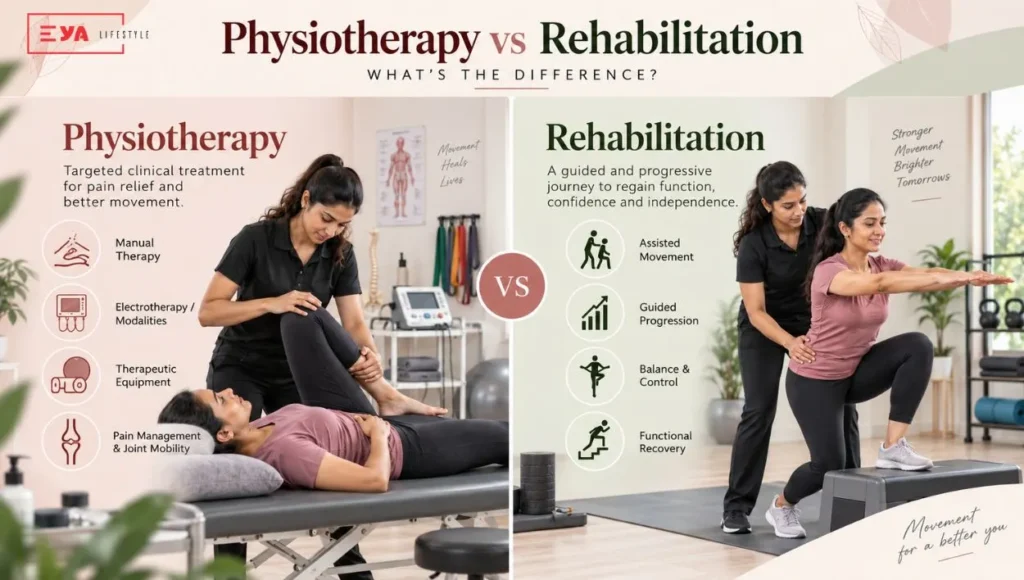
There’s a lot of confusion between the terms physiotherapy vs rehabilitation. They have a lot in common but aren’t always the same. Physiotherapy is a health-related profession that assesses and addresses physical problems that affect how you move and function. Rehabilitation is a broader recovery path that incorporates progressive movement, mobility, strength, balance, and functional retraining, along with physiotherapy. Movement rehabilitation focuses on restoring the physical competency to return to normal movement, exercise, or sport. Physiotherapy vs Rehabilitation: Where Does the Difference Begin? To understand the difference between physiotherapy and rehabilitation, look at how they work during recovery. Physiotherapy A trained physiotherapist can assess pain, injury, and restricted mobility and provide appropriate treatment, exercise, movement advice, education, or hands-on methods. Rehabilitation Rehabilitation covers the broader process of regaining function. Based on what a person needs, it can include: When someone needs clear guidance to regain active movement, a Rehabilitation Centre in Noida can help. Physical Rehabilitation vs Physiotherapy: A Quick Comparison The differences between physical rehabilitation vs physiotherapy are more apparent when you compare their points of emphasis. Physiotherapy Movement Rehabilitation Delivered by qualified physiotherapists Can involve movement and rehabilitation specialists Assesses physical conditions Rebuilds physical capacity progressively May include therapeutic exercise and manual techniques Emphasises active, progressive movement Can work across different recovery stages Connects recovery with function and activity May form one part of rehabilitation Can follow or complement physiotherapy Machine-Based Relief vs Long-Term Rehabilitation Physiotherapy may sometimes use machines or passive techniques to manage pain, stiffness, or discomfort. These methods can offer short-term relief, but if recovery relies only on passive treatment, the underlying movement limitations, weakness, or poor control may still remain. Movement rehabilitation focuses on building more lasting improvement by actively restoring mobility, stability, strength, balance, and functional movement. The aim is not just temporary symptom relief but to help address the factors contributing to the problem and reduce the chances of the same limitation repeatedly interfering with daily life. At EYA Lifestyle, active movement therapy keeps the body involved in recovery. Our movement specialists guide each progression while you actively rebuild the capacity needed to move with greater confidence and return to everyday activity What Does Movement Rehabilitation Actually Work On? Movement rehabilitation doesn’t necessarily mean starting back on the same exercise you did before your injury. It rebuilds the individual components your body needs to move again. Mobility Injury, pain, surgery, or long inactivity can limit comfortable movement. Rehabilitation exercises can gradually restore usable range through the affected area and the surrounding muscles. This is also where mobility rehabilitation in Noida can help people build comfortable movement before moving on. Stability and Balance Having range of motion doesn’t automatically mean you can control it. Rehabilitation can add balance, coordination, and stability work before tougher moves start. Strength Once movement feels more comfortable, resistance can rise step by step. Strength training in Noida can later build the power needed for lifting, carrying, exercise, and daily physical tasks. Functional Movement Recovery should link back to real life. Depending on the person, rehabilitation can slowly bring back: Functional training in Noida helps close the gap between basic rehab and the harder moves daily life asks for. How Do Rehabilitation Exercises Change During Recovery? Good rehabilitation exercises should evolve throughout the process, rather than remain static. Early Recovery The first focus can cover: Building Capacity As symptoms ease and movement improves, rehabilitation can move toward: Returning to Activity The last step should match what you actually want to get back to. Someone trying to return to sport might need sports injury rehabilitation in Noida, while someone returning to a structured exercise program can gradually progress to strength or functional training. When Can Rehabilitation Progress Into Regular Exercise? Feeling better matters, but less discomfort alone doesn’t always mean your body can handle the old workout load. Before stepping up, rehabilitation can check: Once ready, personal training in Noida can give more tailored progression. People rebuilding bodyweight strength and control may later try Callisthenics Classes in Noida if their recovery and goals fit. For others, guided yoga classes in Noida or Pilates can become solid ways to keep building mobility, control, balance, and strength. How Does EYA Approach Movement Rehabilitation? At EYA Lifestyle, movement rehabilitation rests on active movement therapy: we guide; your body does the work. Start With Current Ability Instead of leaping to the end goal, our movement specialists first spot what needs rebuilding: mobility, stability, strength, balance, or control. Progress Bit by Bit The movement path follows: Restore → Move → Build → Stabilise Each stage readies the body for bigger movement demands. Connect Recovery With Fitness As capacity improves, rehabilitation in Noida can link step by step with EYA’s strength training, functional training, personal training, yoga, Pilates, or other fitting movement options. Physiotherapy or Movement Rehabilitation: Which One Do You Need? The physiotherapy vs rehabilitation choice does not have to be one or the other. Conclusion The answer to the question ‘What does physiotherapy mean vs rehabilitation?’ is what your body needs next. Physiotherapy may help arrest and control a physical problem, while movement rehabilitation can restore your mobility, stability, strength, and functional capacity for daily movement. EYA Lifestyle doesn’t leave recovery to chance. Once your body is ready for more, our Noida Rehabilitation Centre connects you with strength training in Noida, functional training in Noida, mobility work, Pilates, yoga, and personal training in Noida, and provides guided rehabilitation. As a Movement & Wellness Centre in Noida, we focus on one simple progression: help you restore movement, rebuild capacity, and gradually move towards the activities that matter to you. Ready to move beyond recovery? Talk to an EYA Movement Specialist and find the right starting point for your body. FAQs Is physiotherapy the same as rehabilitation? No. Rehabilitation is the broader process of restoring physical function and participation; physiotherapy is a healthcare profession that can be part of rehabilitation. What is movement rehabilitation? Movement rehab is a progressive program of movement and
Exercise After Slipped Disc: When Can You Start Again?
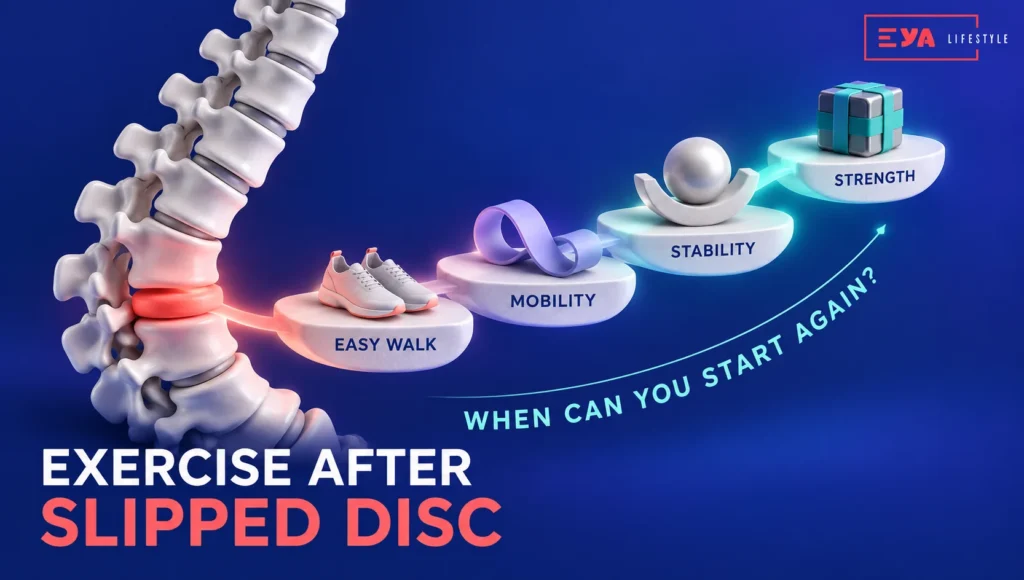
Exercise after slipped disc should start by asking what your body can do now, not how fast you can return to your old-normal lifestyle. A slipped disc, also known as a herniated disc (or prolapsed disc), occurs when the soft material inside a disc in the spine bulges out and can compress the nerves nearby. Back, neck pain, numbness, weakness, tingling, or pain that radiates down an arm or leg. Other people do not experience any symptoms. Recovery doesn’t mean staying flat on your back until every ache has disappeared. If you don’t move enough, you can become stiff and weak. Follow your own pace, your limits, and your doctor/therapist’s instructions. When Can You Start Exercise After Slipped Disc? There isn’t a single universal answer like “7 days” or “4 weeks.” The best time to exercise after slipped disc depends on the disc’s location, symptom severity, nerve involvement, current strength and mobility, and the medical/surgical treatment received. Once the pain doesn’t worsen or become uncomfortable, ease back into gentle activity, like walking. Many certified doctors also advise avoiding prolonged bed rest and gradually increasing activity. Skip the calendar. Work in stages instead. 4 Stages of Slipped Disc Recovery A useful exercise after slipped disc doesn’t mean jumping straight from pain to deadlifting or running, or from an old regimen to a new one after a failed program. It restores what your body needs first. Stage 1: Settle Symptoms and Keep Moving During a bad flare-up, don’t force training through the pain. Short walks, light daily movement, or moves your healthcare pro suggests can keep you active without stirring things up more. Skip any move that clearly ramps up pain or nerve symptoms. Stage 2: Restore Comfortable Movement When symptoms settle enough, shift toward regaining comfortable mobility and everyday movement. Professionally chosen slipped disc recovery exercises may work on spinal movement, hip mobility, posture, and basic control based on what you need. The aim is useful, pain-free movement, not extreme flexibility. Stage 3: Rebuild Strength and Stability If you’re feeling less pain, that doesn’t mean you can return to your previous training level. Progressive strengthening can build the trunk, back, hips, and surrounding muscles while providing more support and control. Physical therapy for a herniated disc can include exercises to strengthen the back and abdominal muscles. Here, exercise after slipped disc moves past simple motion and starts preparing you for bigger demands. Stage 4: Return to Training This step links rehab to your normal life. That might mean strength training, running, recreational sport, or just lifting and moving with confidence day to day. Bring back load, range of motion, exercise complexity, and intensity bit by bit, not all at once. Which Slipped Disc Recovery Exercises Can Help? No single list of slipped disc recovery exercises fits everyone. Choice depends on your symptoms, movement limits, nerve involvement, and current stage. A guided program at a Rehabilitation Centre in Noida may build in: Gentle Walking and Movement Walking offers a simple way to add activity again and cut long spells of sitting still once symptoms allow. Mobility Exercises Guided mobility work can restore comfortable movement in the neck, spine, hips, and surrounding joints. This often forms a key part of mobility rehabilitation in Noida during recovery. Core and Trunk Strengthening Progressive exercises rebuild trunk control and muscle support around the spine. Later, this can link with strength training in Noida based on what you can handle. Functional Movement Bending, squatting, reaching, carrying, and lifting return step by step as you get stronger. Functional strength training in Noida helps close the gap between rehab moves and daily life needs. EYA Lifestyle’s Movement & Wellness Centre in Noida supports rehabilitation, mobility, functional movement, and strength so recovery leads to regular activity. Working Out After Slipped Disc: What Should You Avoid? When working out after a slipped disc, do not rush back to your old intensity. Stay careful with: How Do You Know You Are Ready to Exercise Again? Skip counting weeks since diagnosis. Check how your body works. Check with your healthcare or rehab pro to see whether daily activities feel easier, symptoms remain consistent or improve, basic movements stay under control, and current activities don’t trigger major symptom flares before you step up exercise after slipped disc. Seek closer supervision if numbness, weakness, or radiating pain persists, especially if surgery was performed. Seek immediate medical attention if bladder or bowel control has been lost, numbness has developed around the genital or saddle area, or nerve symptoms become severe or get worse. Why Rehabilitation Should Prepare You to Move Again Rehab should do more than ease the sore spot. It should prepare your body for daily movement, exercise, and rising physical demands. In exercise after slipped disc, the focus shifts from comfortable motion to the strength and control regular activity requires. A structured rehab path may cover: At EYA Lifestyle, our Rehabilitation Centre in Noida uses active movement therapy to keep you active during recovery. Our movement specialists guide while you build mobility, stability, control, and strength. As a Movement & Wellness Centre in Noida, we also help close the space between rehab and your longer-term movement habits. The aim isn’t just to end rehab, it’s to get your body ready to keep going. Conclusion A slipped disc does not force you to quit exercise. Yet jumping back too soon or grabbing random slipped disc recovery exercises without knowing your symptoms makes poor sense. Start where your body sits now. Get comfortable moving back. Rebuild control. Build strength. Then ease into the activities that matter to you. If you want to restart exercise after slipped disc, EYA Lifestyle can provide a guided movement and rehabilitation plan matched to what your body can do and what your recovery needs. Don’t rush back to your old routine. Build your way to better movement. FAQs 1. Can I exercise with a slipped disc? Gentle activity may work for some people, but tailor exercise to your symptoms and
Pilates for Beginners: What to Expect From Your First Class
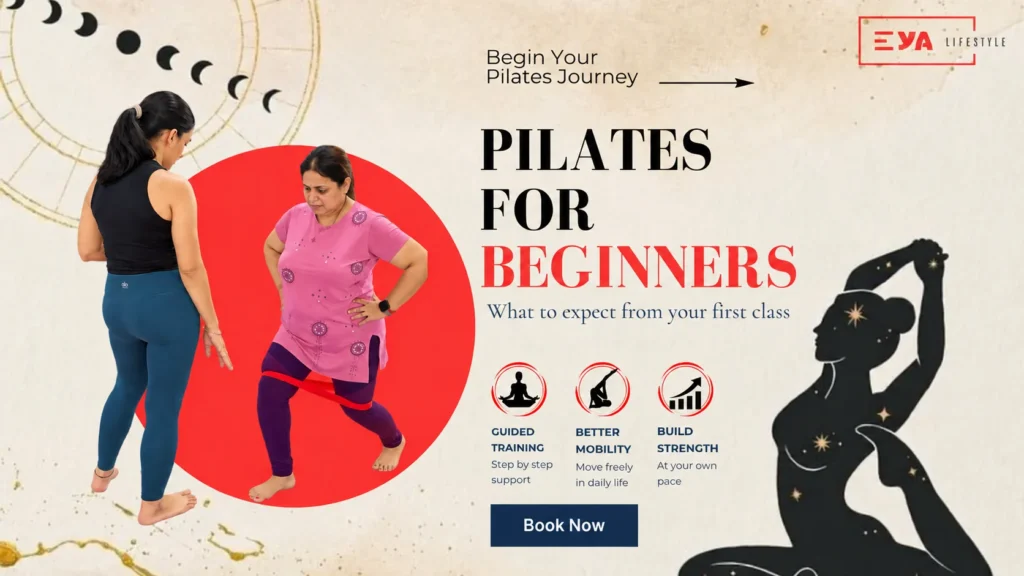
New to Pilates? Here is a little story. You don’t need to be flexible. You don’t need a strong core. Even if you’re not familiar with the names of any of the exercises, it’s OK. Pilates for beginners is only the beginning: you are learning to breathe, engage the right muscles, control your movements, and gradually build strength. Your first few classes will look much simpler than those fancy videos you see online. That is completely normal. A great Pilates session always starts with understanding your body. So if you are wondering what to expect from Pilates, expect fewer rushed movements and more focus on how each exercise actually feels. What Is Pilates for Beginners? Pilates is a gentle form of exercise. It is about controlled movements, core strength, posture, breathing, and stability and mobility. Pilates for beginners teaches these skills through simple movements that are easy to understand and control. You add more resistance or a larger range only later. Being new does not require a special kind of Pilates. All you need is the right beginning and a straight path to success. At EYA Lifestyle, our Pilates Centre in Noida follows the same thinking. If not, you don’t need to do the full range of motion if it doesn’t feel right for your body. We identify what is missing, whether it’s mobility, stability, strength, coordination, or control, and we develop it gradually. What Happens in Your First Pilates Class? The first time you walk into a class at Pilates, it can be a bit weird. The teacher begins to discuss neutral spine, core engagement, alignment, and controlled breathing. It can sound confusing at first. But don’t worry. Nobody expects you to know these words already. A good class introduces everything slowly and clearly. Understanding Your Starting Point The instructor will first observe you move before making things harder. They will observe whether you are sitting squarely, balancing and moving around, and if you can control basic movements. Please tell them about any injuries, pain, pregnancy, recent surgery, or health issues before starting. This will help you determine where small adjustments are needed. Learning Breathing and Core Engagement Beginners often notice Pilates’ focus on breathing and control first. You are not doing many repetitions; instead, you are practicing breathing in sync with the movement. You also develop greater awareness of your abdominal and trunk muscles. Core engagement does not mean sucking your stomach in hard. It means learning how your trunk supports and controls the movement. Moving Slowly On Purpose Your first Pilates class may have movements that look very easy. Then you try them. Pilates employs slow and controlled repetitions. With good alignment and muscle engagement, even small movements can be difficult. Slow does not mean easy. In Pilates, slow usually means you are finally feeling the real work. What Does a Beginner Pilates Workout Include? A beginner Pilates workout is meant to build strong foundations. It should not surprise you with higher-level exercises in your first class. This will vary depending on the teacher, the format, and what you can do already. Most beginner sessions focus on a few areas. Core Control and Stability Pilates is known for core work. But beginners first need to learn how to activate and control the trunk properly. Exercises slowly challenge the abdominal muscles, lower back, hips and pelvis together as one support system. Mobility and Flexibility Not every tight area needs hard stretching. Controlled spinal movement, hip mobility, shoulder movement, and gentle range-of-motion work help you understand where you move freely and where you need gradual improvement. Lower and Upper-Body Strength Pilates for beginners isn’t just about the stomach. It also targets glutes, lower legs, upper legs, arms, shoulders, and back muscles without losing focus on alignment and control. Balance and Coordination As you improve, Pilates starts asking different body parts to work together while you stay stable. This improves coordination and body awareness along with strength. Mat Pilates or Equipment Pilates: Where Should Beginners Start? Both options are useful. Mat Pilates sessions mainly use your body weight and the floor. Sometimes small accessories are added. Equipment-based Pilates can give resistance and support through special apparatus. Neither is automatically better for beginners. A well-planned Mat Pilates class can teach control, breathing, alignment, and body awareness without needing complicated equipment. If you are looking for the best Mat Pilates studio in Noida, don’t just look at the interiors. Check the instructor guidance, class size, how movements progress, whether modifications are available, and whether the studio actually teaches you to understand the movement. These things matter much more after the first class. What Will Pilates Feel Like as a Beginner? This is another important part of what to expect from Pilates. Many beginners underestimate it. You may not finish the class completely sweaty. But muscles you rarely notice can suddenly start working. A workout does not have to leave you very sore to be useful. You May Discover Muscles You Weren’t Using Well Controlled exercises often make you notice smaller stabilising muscles. You also start seeing where your body usually takes shortcuts. Coordination May Feel Awkward Initially At first, it can be difficult to coordinate breathing, maintaining alignment, and moving another part of the body. With practice, it becomes more natural. Progress May Look Different From Traditional Fitness Progressions are not just about the weight or the reps. For beginners, progress in Pilates can mean controlling a movement more effectively, holding a position longer, extending your range of motion, feeling more stable, or finishing an exercise that was previously challenging. What Are the Benefits of Pilates for Beginners? Regular practice at the right level can help improve all of the following. Better Core Strength Pilates trains the trunk to support movement. It does not treat the core as something you only work through crunches. Improved Posture and Body Awareness When you practice often, you’re more conscious of how you are sitting, standing, staying stable and moving throughout the day. Greater Mobility
Yoga for PCOS and PCOD: Benefits, Exercises & How to Start
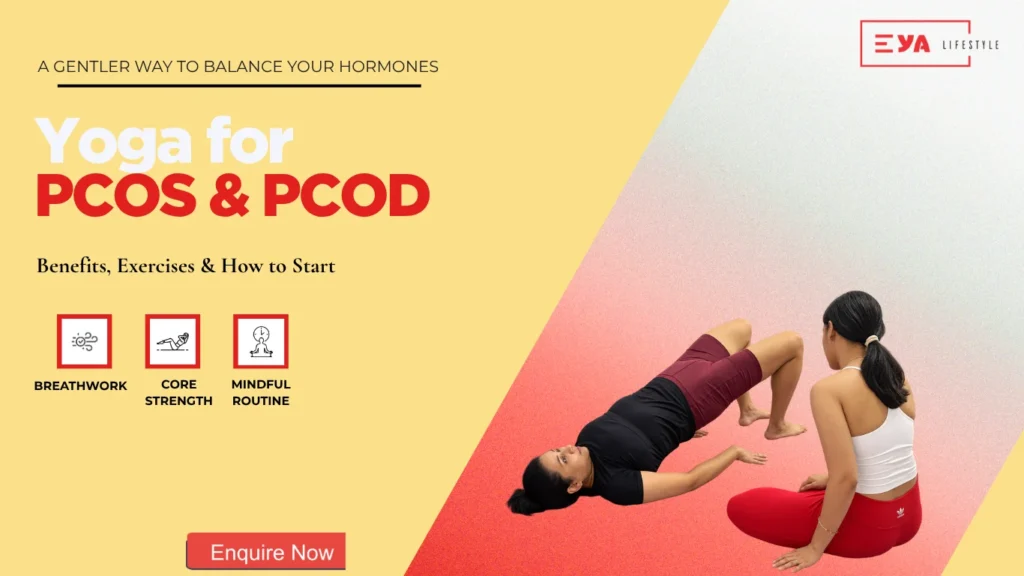
PCOS often makes health hard to predict. Cycles shift, weight feels harder to manage, stress levels rise, and symptoms vary widely from one woman to the next. That is why dealing with PCOS or PCOD should not just mean “do more exercise.” Yoga for PCOS and PCOD can be useful as a part of a holistic lifestyle and medical treatment plan. It incorporates strength training, movement, range of motion, breathing, and rest. While it doesn’t cure PCOS or directly affect hormonal issues, it does encourage women to exercise regularly and to support multiple areas of well-being, which are important for women with PCOS. At EYA Lifestyle, a Movement and Wellness Centre in Noida, the focus is on making yoga and guided movement adaptable, consistent and suitable for each woman’s individual needs. The secret is not to search for poses that guarantee magic, but rather to select the correct kind of practice. Why Is Yoga for PCOS and PCOD Considered Helpful? The hormonal and metabolic changes are linked to PCOS. Care can involve diet, regular exercise, sleep, stress management, and medical treatment, all tailored to the person. Yoga fits in as a movement you can adjust to any fitness level. Helps You Stay Physically Active Hard workouts immediately after months or years of inactivity are difficult to follow. Yoga lets you begin with easy moves and build up slowly. Women gain better mobility, more control over their bodies, and greater self-belief before trying tougher sequences. Can Support Stress Management PCOS hits more than the body. Dealing with uneven cycles, body shifts, worries about having children, or other symptoms often piles on emotional stress. Yoga pairs movement with steady breathing and rest time. This turns it into a solid add-on for stress control instead of turning exercise into one more pressure. Builds Strength Alongside Flexibility Many people think yoga is just stretching, but many poses require muscle use and support. Proper yoga for PCOS and PCOD can help boost flexibility, mobility, core strength, balance, and overall strength. PCOS Yoga Exercises: What Should a Balanced Routine Include? There is no one asana that works for all women suffering from PCOS. A smarter routine covers different movement needs instead of repeating a few poses sold as PCOS fixes. A PCOS-focused yoga practice can cover these parts. Hip and Pelvic Mobility Moves that take the hips through easy ranges fit into a wider mobility mix. Examples include butterfly pose, low lunge, and gentle hip openers. The goal stays clear: improve easy movement around the hips and pelvis over time, not force a stretch. Spinal Mobility and Controlled Twists Cat-Cow, soft seated twists, and other steady spine moves bring motion into spots that stiffen from long sitting and little activity. Keep twists comfortable. Never force them any further as a result of some claim that they clean the body or that they wake some organs. Strength-Building Yoga Poses A good PCOS routine does not stay soft all the way. Warrior variations, bridge pose, chair pose, and adjusted plank-style moves add more muscle work and bodyweight strength. Raise the challenge as the person grows stronger rather than starting with the hardest form of every pose. Breathing and Relaxation The physical part of the session is completed by breathwork and a rest period. One of the most useful breathing patterns for PCOS yoga exercises includes slow, steady breathing and resting poses. Can Yoga Balance Hormones in PCOS? This is where many people get PCOS wrong. Many posts call single poses ways to balance female hormones, cure PCOS, or fix hormone problems on the spot. Those claims oversimplify a complicated health issue. Yoga exercises for hormonal health work better as helpful movement. Steady activity, stress control, sleep, and other daily habits support overall health. Doctors may still suggest extra treatment based on symptoms and each person’s case. Yoga can fit into that lifestyle mix, yet it must never replace proper PCOS care. Yoga for Common PCOS Concerns PCOS looks different for every woman, so the reason for doing yoga can change too. PCOS and Weight Management Yoga adds to regular activity, but weight control should not rest on yoga alone. A fuller plan may pair yoga with strength work, walking, cardio, or other fitting exercise. Food, sleep, stress, and personal metabolism factors matter too. PCOS and Irregular Periods Uneven cycles show up often with PCOS, yet no one should promise yoga will set periods right. Movement supports overall well-being. Ongoing cycle problems need a talk with a proper healthcare professional. PCOS and Fertility Concerns Women with PCOS also often have difficulty with pregnancy. Yoga supports activity, mobility, and stress control during that time, but it is not a fertility treatment. Fertility worries call for proper medical checks and advice. PCOS and Low Energy When energy drops, movement doesn’t have to stop. A lighter workout that emphasizes movement, breathing, and slower movements like yoga can feel more manageable than a challenging workout. Slowly build up the pace as they become more capable. Yoga Alone or Yoga With Strength and Cardio? You don’t need to choose one or the other. Depending on health, fitness, and professional advice, many women create a well-rounded exercise combination of yoga, resistance/stability strength training, and cardio. Yoga brings mobility, balance, body awareness, controlled strength, and rest. Strength training includes progressive muscle stress, and cardio exercises help build heart and lung fitness. Instead of asking, “Which single exercise fixes PCOS?”, ask this: “What mix of movement can I keep up for real?” That change matters because lasting consistency beats jumping from one extreme plan to another. How Should Beginners Start Yoga for PCOS? If yoga is new to you, do not measure your start by how the finished pose looks. At EYA Lifestyle, our yoga classes in Noida, we break movement down step by step. If your body cannot hold a certain pose comfortably today, we first work on the mobility, stability, control, or strength needed to move toward it. Begin with simpler moves. Learn to
Rehabilitation After Sports Injuries: A Complete Guide
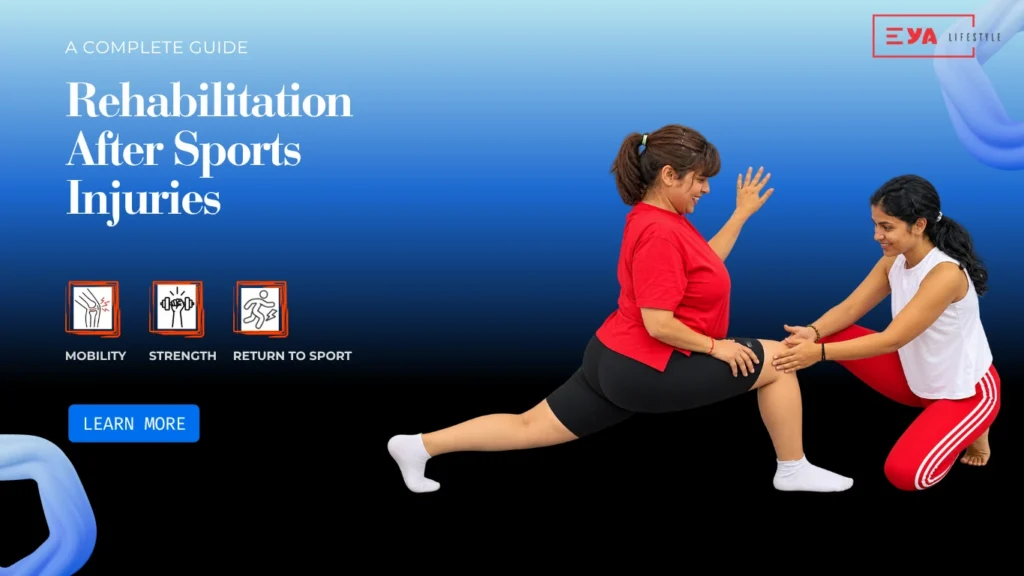
Injuries almost never send a warning first. An awkward landing during a football match, a shoulder that’s taken one too many weeks of swimming, or a sudden twist mid run, any of it can put months of hard work on hold overnight. Here’s the part that actually matters, though: an injury doesn’t have to be the end of your performance. With the right sports injury rehabilitation, recovery becomes more than healing. It is a true opportunity to regain strength, improve movement patterns, and reduce the risk of injury occurring again. From a professional athlete to someone training every weekend, to anyone wanting to get back into activity, well-designed rehabilitation services in Noida are a sure way to recover with confidence, without having to wait for the pain to pass. What is Sports Injury Rehabilitation? Sports injury rehabilitation is a progressive program that restores mobility, strength, flexibility, balance, and maximum function following an injury. Regardless of the injury type, rehab aims to ensure the body recovers properly and minimizes the risk of re-injury. This is not a treatment to simply manage the pain and keep it at bay. Rehabilitation comes after addressing the true cause of the movement restriction, allowing the person to return to sport, fitness, or everyday life without ‘tiptoeing around it’. Key Stages of Rehabilitation After Sports Injury Pain and Inflammation Management The first priority is always to reduce pain and swelling while protecting the injured area. The right sports injury treatment at this stage lays the groundwork for everything that comes after. Restoring Mobility Once healing kicks in, controlled movement becomes the focus. Gentle stretching and guided mobility work prevent stiffness and restore mobility. Strength Building Once movement improves, targeted sports rehabilitation exercises rebuild muscle strength, improve balance, and restore coordination. None of this runs on a one-size-fits-all routine; it’s built around the actual injury. Return to Performance The last stage gets the body ready for sport-specific movement, functional activity, and higher-intensity performance. This is where confidence actually gets tested against real-life demands. Injury Recovery Exercises That Support Long-Term Health Recovery isn’t a random set of workouts pulled off the internet. The right injury recovery exercises depend entirely on the injury itself, the stage of recovery, and how your body actually moves. A structured rehab program typically consists of the following: Mobility and Flexibility Exercises Gentle mobility and stretching work helps to increase joint movement, prevent stiffness, and increase flexibility, which is an essential part of sports injury recovery and rehab that is actually a lifelong process. Stability and Balance Training Balance-focused exercises build up the supporting muscles, help to refine coordination, and stabilise joints, reducing the likelihood of any future injuries and helping with proper athletic injury rehabilitation. Functional Strength Development Specific strength training exercises rebuild strength in muscles affected by the injury, restore functional movement, and prepare the body to return safely to sport and daily activities. Core Conditioning A strong core improves posture, balance, and body control, and that stable foundation speeds up sports injury rehabilitation and helps prevent the same injury from coming back. Controlled Movement Drills Progressive movement drills build confidence, improve coordination, and prepare the body for more challenging physical activity. They also help avoid unnecessary stress on healing tissues. Sport-Specific Progression Exercises These more advanced sports rehabilitation exercises are designed to replicate sport-specific movements, helping athletes return to performance, build confidence, and ensure a safe return to training or competition. At EYA Lifestyle, every rehabilitation plan is personalised to your injury, recovery stage, and fitness goals. As a Wellness and Movement Centre in Noida, our Sports Injury Rehabilitation approach is based on guided sports rehabilitation exercises. This is designed to restore strength, improve movement, and support a safe return to an active life. This is exactly what someone looking for sports injury rehabilitation in Noida or the Best Sports Rehabilitation Center in Noida should look for: structured, personalized treatment. Conclusion It’s important to understand that a sports injury is not just about making the pain stop. It’s about regaining strength, real movement, and enjoying the activities you love again with confidence. With the proper supervision and guidance of a rehabilitation specialist, recovery can be safer and more effective, focused on long-term health rather than a quick fix. For professional treatment, EYA Lifestyle provides customised Sports Injury Rehabilitation in Sector 40 Noida, employing evidence-based strategies, functional movement exercises, and a comprehensive approach to health and wellness. Book your rehabilitation assessment today at our wellness and movement studio for speedy recovery.