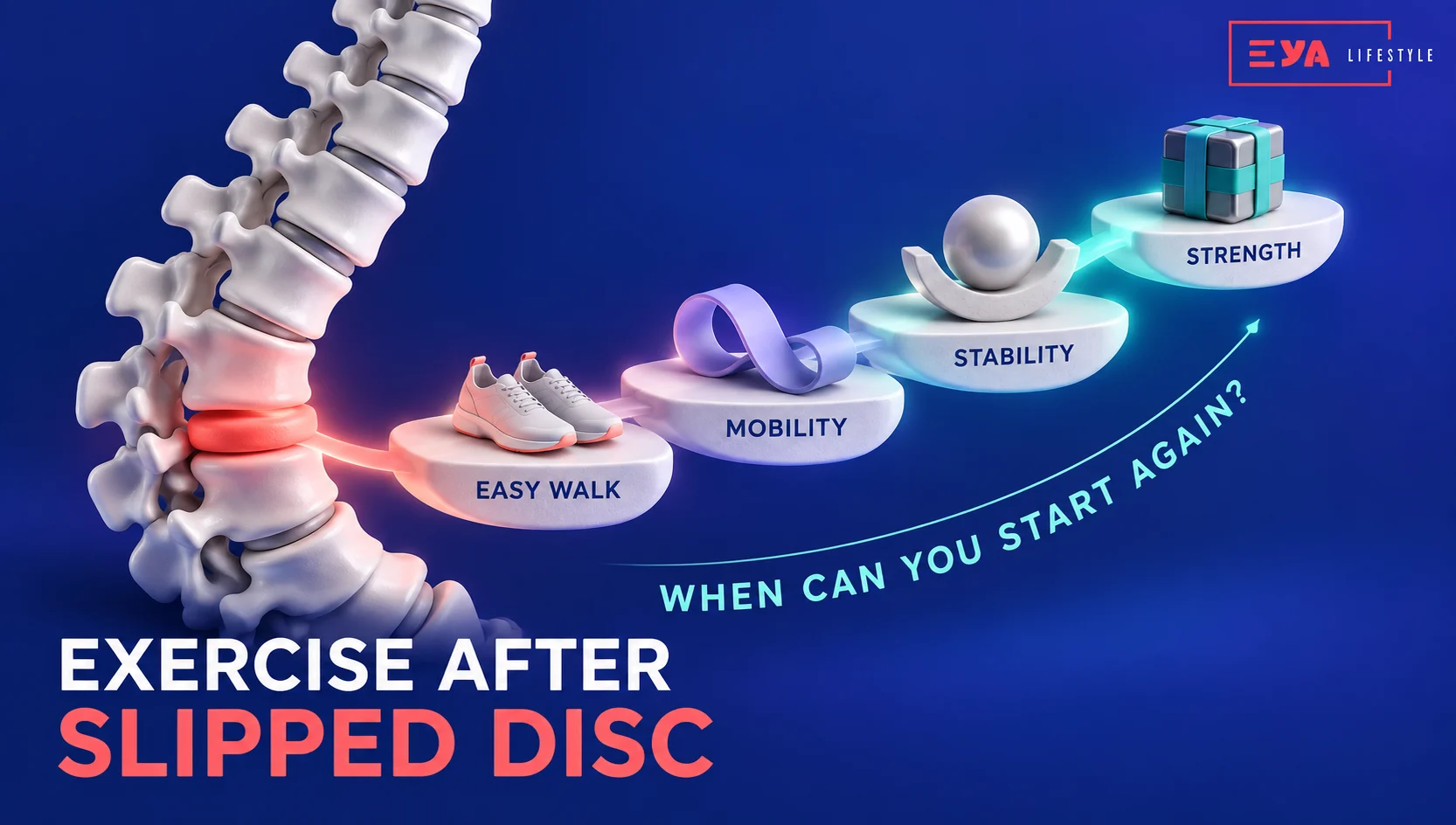
Exercise after slipped disc should start by asking what your body can do now, not how fast you can return to your old-normal lifestyle.
A slipped disc, also known as a herniated disc (or prolapsed disc), occurs when the soft material inside a disc in the spine bulges out and can compress the nerves nearby. Back, neck pain, numbness, weakness, tingling, or pain that radiates down an arm or leg. Other people do not experience any symptoms.
Recovery doesn’t mean staying flat on your back until every ache has disappeared. If you don’t move enough, you can become stiff and weak. Follow your own pace, your limits, and your doctor/therapist’s instructions.
When Can You Start Exercise After Slipped Disc?
There isn’t a single universal answer like “7 days” or “4 weeks.”
The best time to exercise after slipped disc depends on the disc’s location, symptom severity, nerve involvement, current strength and mobility, and the medical/surgical treatment received.
Once the pain doesn’t worsen or become uncomfortable, ease back into gentle activity, like walking. Many certified doctors also advise avoiding prolonged bed rest and gradually increasing activity. Skip the calendar. Work in stages instead.
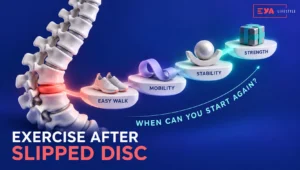
4 Stages of Slipped Disc Recovery
A useful exercise after slipped disc doesn’t mean jumping straight from pain to deadlifting or running, or from an old regimen to a new one after a failed program. It restores what your body needs first.
Stage 1: Settle Symptoms and Keep Moving
During a bad flare-up, don’t force training through the pain. Short walks, light daily movement, or moves your healthcare pro suggests can keep you active without stirring things up more. Skip any move that clearly ramps up pain or nerve symptoms.
Stage 2: Restore Comfortable Movement
When symptoms settle enough, shift toward regaining comfortable mobility and everyday movement. Professionally chosen slipped disc recovery exercises may work on spinal movement, hip mobility, posture, and basic control based on what you need. The aim is useful, pain-free movement, not extreme flexibility.
Stage 3: Rebuild Strength and Stability
If you’re feeling less pain, that doesn’t mean you can return to your previous training level.
Progressive strengthening can build the trunk, back, hips, and surrounding muscles while providing more support and control. Physical therapy for a herniated disc can include exercises to strengthen the back and abdominal muscles.
Here, exercise after slipped disc moves past simple motion and starts preparing you for bigger demands.
Stage 4: Return to Training
This step links rehab to your normal life. That might mean strength training, running, recreational sport, or just lifting and moving with confidence day to day. Bring back load, range of motion, exercise complexity, and intensity bit by bit, not all at once.
Which Slipped Disc Recovery Exercises Can Help?
No single list of slipped disc recovery exercises fits everyone. Choice depends on your symptoms, movement limits, nerve involvement, and current stage. A guided program at a Rehabilitation Centre in Noida may build in:
Gentle Walking and Movement
Walking offers a simple way to add activity again and cut long spells of sitting still once symptoms allow.
Mobility Exercises
Guided mobility work can restore comfortable movement in the neck, spine, hips, and surrounding joints. This often forms a key part of mobility rehabilitation in Noida during recovery.
Core and Trunk Strengthening
Progressive exercises rebuild trunk control and muscle support around the spine. Later, this can link with strength training in Noida based on what you can handle.
Functional Movement
Bending, squatting, reaching, carrying, and lifting return step by step as you get stronger. Functional strength training in Noida helps close the gap between rehab moves and daily life needs.
EYA Lifestyle’s Movement & Wellness Centre in Noida supports rehabilitation, mobility, functional movement, and strength so recovery leads to regular activity.
Working Out After Slipped Disc: What Should You Avoid?
When working out after a slipped disc, do not rush back to your old intensity. Stay careful with:
- Heavy lifting too soon
- Sudden bending or twisting under load
- High-impact exercises before you’re ready
- Aggressive stretching
- Exercises that worsen pain or radiating symptoms
- Pushing through numbness, tingling, or weakness
- Increasing weight and intensity too quickly
How Do You Know You Are Ready to Exercise Again?
Skip counting weeks since diagnosis. Check how your body works.
Check with your healthcare or rehab pro to see whether daily activities feel easier, symptoms remain consistent or improve, basic movements stay under control, and current activities don’t trigger major symptom flares before you step up exercise after slipped disc.
Seek closer supervision if numbness, weakness, or radiating pain persists, especially if surgery was performed.
Seek immediate medical attention if bladder or bowel control has been lost, numbness has developed around the genital or saddle area, or nerve symptoms become severe or get worse.
Why Rehabilitation Should Prepare You to Move Again
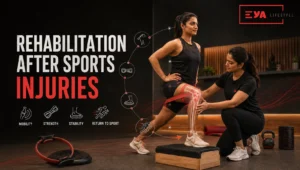
Rehab should do more than ease the sore spot. It should prepare your body for daily movement, exercise, and rising physical demands. In exercise after slipped disc, the focus shifts from comfortable motion to the strength and control regular activity requires.
A structured rehab path may cover:
- Restore comfortable mobility: Work on tight spots gradually without forcing past what you can handle now.
- Rebuild stability and control: Build better trunk control and stability before harder moves.
- Develop functional strength: Move toward strength training in Noida when ready, so you regain the power for daily tasks and exercise needs.
- Return to everyday movement: Bring back bending, reaching, lifting, carrying, and other real-life patterns step by step.
- Progress towards individual training: Guided Personal Training in Noida can match intensity, resistance, and moves to your current stage.
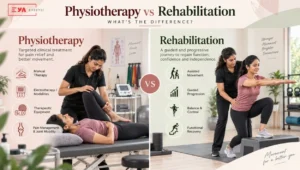
At EYA Lifestyle, our Rehabilitation Centre in Noida uses active movement therapy to keep you active during recovery. Our movement specialists guide while you build mobility, stability, control, and strength.
As a Movement & Wellness Centre in Noida, we also help close the space between rehab and your longer-term movement habits. The aim isn’t just to end rehab, it’s to get your body ready to keep going.
Conclusion
A slipped disc does not force you to quit exercise. Yet jumping back too soon or grabbing random slipped disc recovery exercises without knowing your symptoms makes poor sense.
Start where your body sits now. Get comfortable moving back. Rebuild control. Build strength. Then ease into the activities that matter to you.
If you want to restart exercise after slipped disc, EYA Lifestyle can provide a guided movement and rehabilitation plan matched to what your body can do and what your recovery needs.
Don’t rush back to your old routine. Build your way to better movement.
FAQs
1. Can I exercise with a slipped disc?
Gentle activity may work for some people, but tailor exercise to your symptoms and medical picture. Avoid activities that clearly cause pain or nerve symptoms.
2. How long should I wait before exercising after a slipped disc?
No fixed timeline fits everyone. Your return hinges on symptoms, function, severity, and treatment. Gradual steps beat any random date.
3. Is walking good during slipped disc recovery?
Walking often works as a gentle way to stay active when it does not worsen symptoms. Start at your tolerance and increase gradually over time.
4. Can I return to strength training after a slipped disc?
Yes for many, with recovery and pro guidance. Rebuild resistance, range, technique, and difficulty step by step instead of jumping to old loads.
5. Which exercises should I avoid with a slipped disc?
There is no common list of banned items. Avoid or modify any movement that increases symptoms, and see a professional if pain, numbness, weakness, and/or radiating symptoms persist.
6. Where can I get guided slipped disc rehabilitation in Noida?
EYA Lifestyle offers movement-led rehab in Noida that rebuilds mobility, stability, strength, and functional movement based on what each person can do.